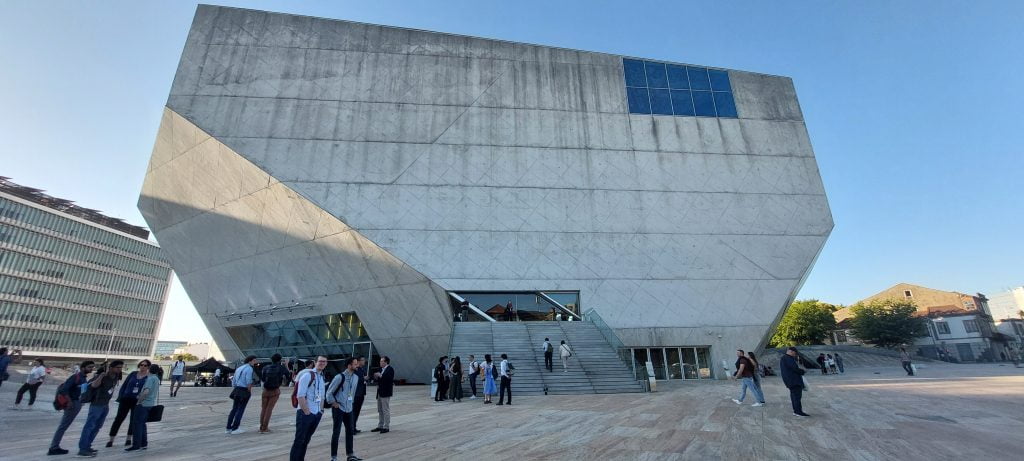
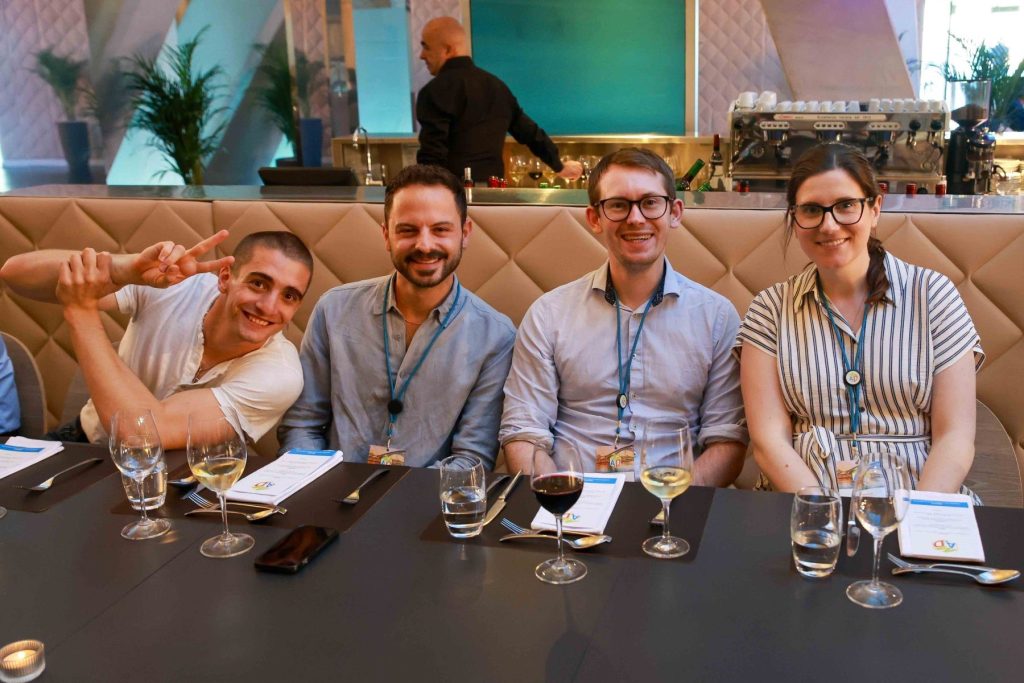
We are delighted to announce that Imelda Friel and Andrew Colligan from the Queens University Belfast RIED team have recently taken part in the July 2024 MadeAI Conference in Porto, Portugal.
MadeAI stands for Modelling, Data Analytics, and AI and from the MadeAI website, it is argued that today’s rapidly evolving science and technology landscape, modelling, data analytics, and artificial intelligence (AI) play pivotal roles in reshaping problem-solving strategies across diverse industrial sectors. From aerospace and automotive to chemical, construction, energy, healthcare, materials, and transportation, these transformative technologies address complex challenges and drive innovation. The intersections of modelling, data analytics, and AI are deeply rooted in their mathematical and computational frameworks. However, a regrettable trend persists: these disciplines are often studied in isolated silos within engineering and science programs, lacking extensive interdisciplinary collaboration. To unlock their full potential as breakthrough solutions at the engineering forefront, integration using a holistic systems approach becomes imperative. The MadeAI conference, brings together accomplished researchers and industry leaders from the global communities of computer science, engineering, and mathematics converge to exchange ideas. Explore the fusion of modelling, data analytics, and AI in engineering and unearth new opportunities. This conference aims to foster research and innovation in the realms of modelling, data analytics, and AI within engineering. The MadeAI conference serves as a catalyst for advancing research and shaping the future of engineering through the convergence of these powerful technologies. Further information can be taken from the MadeAI website available via the following link.
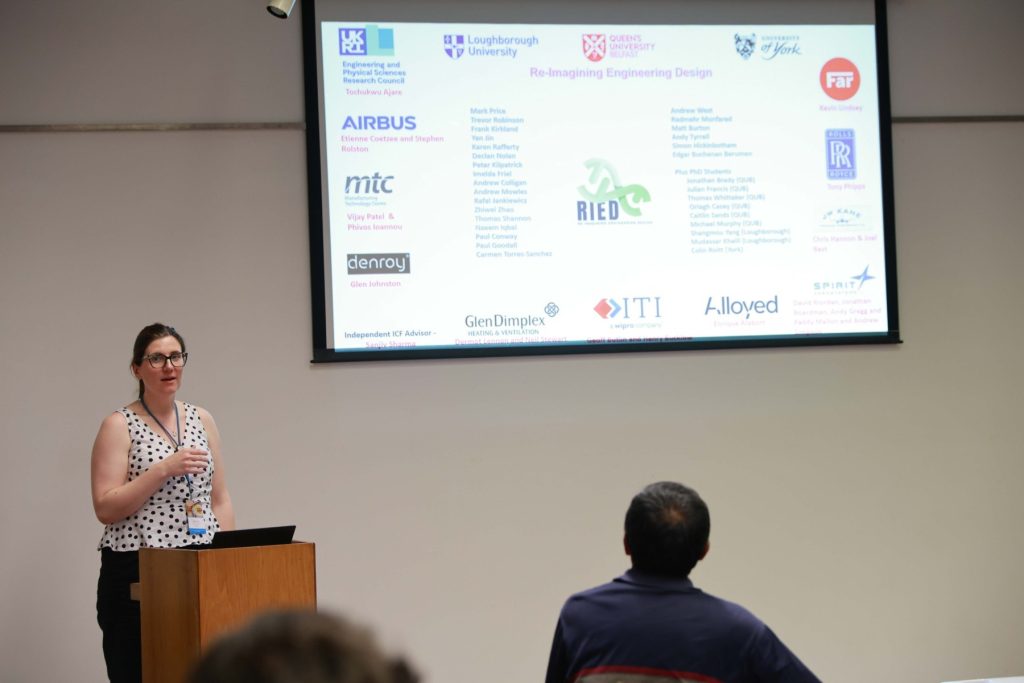
Imelda presented the paper “Towards producing innovative engineering design concepts using AI” and was supported in person by Andrew. This paper examines the application of a novel Evolutionary-Development (Evo-Devo) system that integrates AI tools within the conceptual design process to produce populations of innovative design options. The aim is to allow the behaviours of designs to be learned and then exploited later in the design process. Here a design concept (referred to as an organism) is constructed from cells, which have an evolving NN architecture controlling each cells’parameterisation. The following work demonstrates the application of the Evo-Devo process on a volume-to-point heat transfer problem, returning design concepts with a network of heat channels that direct heat built up in the plate to a point at ambient temperature. This paper and associated presentation can be found via our RIED website Library and publications pages.
There was a full programme of presentations and events across the city over the four days too.